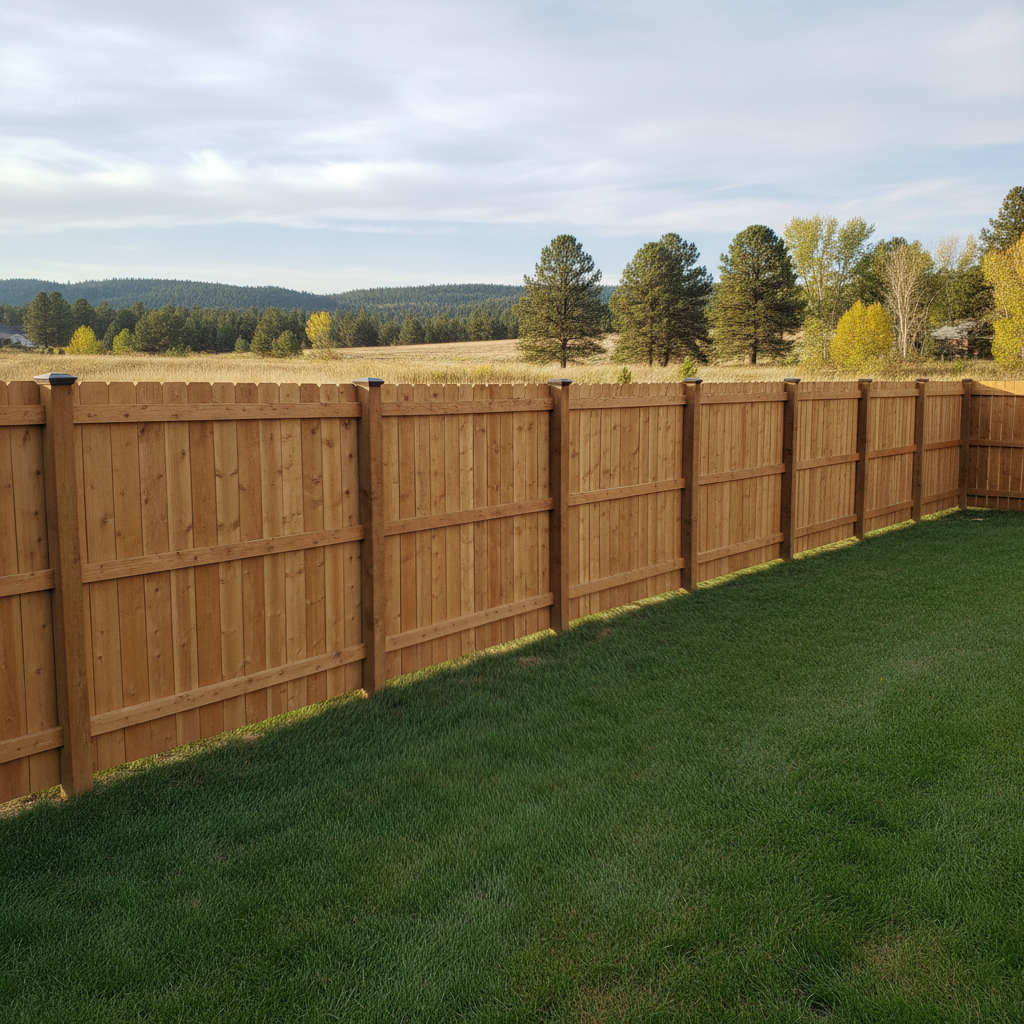
You're probably looking for a privacy fence, right? Something to keep nosy neighbors out, maybe protect your kids or pets, or just give you a little slice of quiet in your own backyard. That's a smart move, but I've watched plenty of folks around Spearfish stumble on some pretty common mistakes when they're planning or hiring for one. And trust me, you absolutely do not want to regret a fence installation.
Not Understanding Local Codes & Setbacks
This is probably the biggest mistake, and it's a monumental headache if you mess it up. Every town, Spearfish included, has specific rules about how tall your fence can be, where it needs to sit relative to your property lines, and even what materials you're allowed to use in certain spots. You can't just throw up a 10-foot fence right on your property line if the city says 6 feet is the maximum and you need a two-foot setback from the sidewalk.
I've seen people build a gorgeous fence, only to get a notice from the city telling them they have to rip it down or change it. That's money and time, poof, gone. Before you even start thinking about designs or contractors, swing by the Spearfish City Hall planning department. They'll have all the information you could possibly need. And don't just go by what your buddy did across town; rules can actually change even within different zones right here in Spearfish.
Ignoring the Ground Beneath Your Feet
Spearfish, you know, has some interesting soil conditions. It really depends on whether you're up closer to the foothills or down by the creek. We've got everything from rocky, clay-heavy soil that's a nightmare to dig through, to softer, more loamy stuff. So, what does that mean for your privacy fence? Well, if you're trying to sink posts into solid rock, you're going to need different tools and techniques than if you're just digging through regular topsoil. This affects how long installation takes, how much it costs, and ultimately, how stable your fence will be.
A lot of homeowners just figure dirt is dirt. But if your contractor isn't asking about your specific soil or doing a little test digging beforehand, that's a pretty big red flag. Improper post setting because of tough ground can lead to leaning fences, especially after a few freeze-thaw cycles or a good Black Hills windstorm. You want those posts deep and secure, no matter what's hiding under there.
Choosing the Wrong Material for Privacy & Maintenance
When someone says 'privacy fence,' most people instantly picture wood. And sure, wood is a classic. But it's not the only option, and it's definitely not always the best one for everyone's lifestyle or budget in the long run.
- Wood: Looks fantastic, gives you total privacy. But it needs upkeep – staining, sealing, maybe replacing boards down the road. If you're not up for that every few years, you'll end up with a gray, warped fence pretty quickly.
- Vinyl: Super low maintenance, really durable, and comes in tons of styles that offer complete privacy. It costs more upfront, yes, but you'll never paint or stain it. Just spray it down with a hose.
- Composite: This is a blend of wood and plastic. It offers privacy, holds up well, and needs less maintenance than wood, but it still has a bit of that natural look. Price-wise, it usually sits somewhere in the middle.
Seriously, think about how much time you actually want to spend taking care of your fence. If your answer is "zero," then wood might not be your best bet, even if it seems cheaper initially. Don't just pick what looks good in a magazine; consider the long-term commitment.
Not Getting a Clear, Detailed Quote
This is where things can really get messy. You call a few contractors, they toss out a number, and you pick the cheapest one. Sometimes, that's a bad move. A good quote isn't just one single price. It should break down everything:
- Materials: What kind of wood, vinyl, or composite? What grade? What type of posts are they using?
- Labor: How many days will it take? How many crew members?
- Permits: Who's responsible for pulling them? (Hint: It should almost always be the contractor.)
- Site Prep: Is removing your old fence included? What about grading or clearing brush?
- Cleanup: What happens to all the debris once they're done?
- Warranty: What's covered, and for how long?
If a quote is just a single line that says 'Privacy Fence: $X,XXX,' you're practically asking for trouble. You won't know what's actually included, and you'll probably run into hidden costs or misunderstandings. Here at Mighty Fence Co, we make sure our quotes are crystal clear, so you get no surprises.
Forgetting About Gates
It sounds so simple, but gates are often an afterthought. How wide do you actually need your gate? Just for people? For a lawnmower? For a vehicle to get into the backyard? Do you need one gate or two? And where should they even go?
A poorly planned gate can be a huge pain. You don't want to have to squeeze your lawnmower through a tiny opening or suddenly realize you can't get your trailer into the backyard anymore. Think about your future needs, too. Maybe you don't own an RV now, but if you get one down the road, will your fence limit your options then?
Getting a privacy fence is a big investment, and it really does add a lot to your home. Just make sure you do your homework, ask the right questions, and don't rush into it. You'll be much, much happier with the finished product.