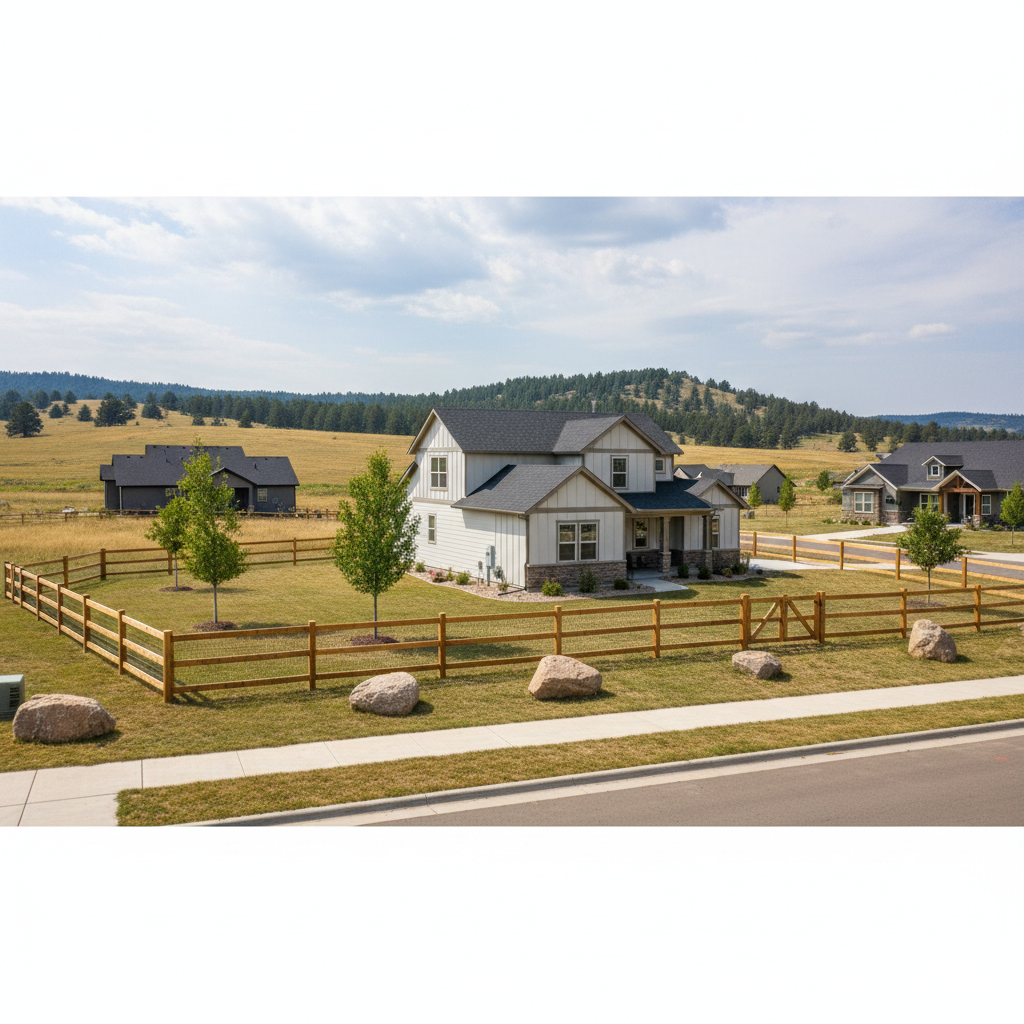
Got livestock? Need to define your property line out in the valley or up in the foothills? Farm fencing around Spearfish is a whole different beast than your backyard privacy fence. You're not just putting up a barrier; you're building a system that needs to withstand our crazy weather, determined animals, and the test of time. I've seen a lot of farm fences over the years, and I can tell you, cutting corners here usually costs you more in the long run.
Choosing the Right Fence Type for Your Farm
First things first: what are you trying to fence in or out? That's the biggest question. Your choice of material and design will change dramatically if you're containing a prize-winning stallion versus keeping deer out of your hayfield, or just marking a boundary. Here are a few common types we see around Spearfish:
- Woven Wire: This is a classic for a reason. Good for smaller livestock like sheep, goats, or even keeping dogs contained. The smaller mesh prevents animals from getting their heads stuck, which is a big deal. You'll often see this paired with a top strand of barbed wire for extra security.
- High-Tensile Wire: If you've got cattle or horses, this is often the go-to. It's incredibly strong, durable, and can be electrified. The beauty of high-tensile is its flexibility; it can handle a lot of pressure without breaking, and it's pretty low maintenance once it's up. You'll need good corner bracing for this one, though, because that tension is no joke.
- Barbed Wire: Still a staple for large acreage and cattle. It's cost-effective and a deterrent. However, it's not ideal for all animals, especially horses, due to injury risk. You'll often see it as a top or bottom strand in combination with other fencing.
- Wood Post & Rail: More aesthetic, often used for horses or defining property lines where looks matter. It's sturdy, but requires more maintenance than wire and is generally more expensive.
Each type has its pros and cons, and what works for your neighbor down by Crow Peak might not be the best fit for your place up near Cheyenne Crossing.
Why Local Conditions Matter So Much
You can't just buy a generic farm fence kit and expect it to hold up here. We've got some unique challenges in Spearfish:
- Our Soil: Depending on where you're at, you could be dealing with rocky, shallow soil or deep, loamy ground. This drastically impacts how you dig post holes and what kind of footings you need. You can't just pound posts anywhere; sometimes you're drilling through solid rock, and other times you're fighting mud.
- Wind: The wind here can be brutal. A poorly constructed fence, especially one with a lot of surface area like a solid panel, will become a sail in a good Spearfish Canyon gust. You need solid posts, set deep, and good bracing.
- Snow Load: Winter brings heavy snow. A fence that's not built to handle the weight of drifts can get pushed over or damaged.
- Wildlife: Deer, elk, coyotes, and even bears in some areas. What you're trying to keep out (or in) will dictate the height and strength of your fence.
I've seen fences that looked great for a year, then buckled under the first big snow or got blown over in a spring storm because the posts weren't set right for our local conditions. That's a headache and an expense you don't need.
The Mighty Fence Co. Difference: Local Expertise
This isn't just about hammering posts. It's about understanding the land, the weather, and what your specific needs are. When you call Mighty Fence Co., you're talking to someone who's worked on properties all over Spearfish, from the agricultural lands east of town to the more rugged terrain up in the hills. We know what works, what doesn't, and how to build a fence that will stand strong for years, not just seasons.
We'll come out, look at your property, talk about your animals, your budget, and what you're trying to achieve. Then we'll recommend a solution that's tailored for you and for Spearfish. Don't settle for a one-size-fits-all approach when it comes to protecting your livestock and your land.